
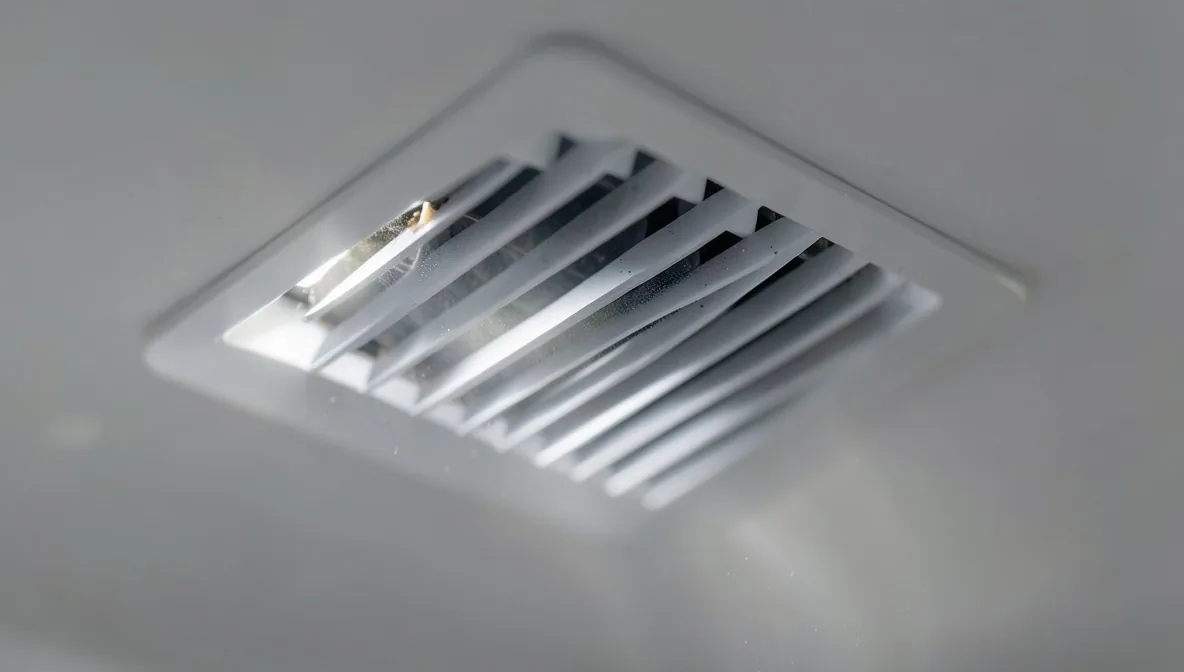
What are VOCs, and why are they in my home air?
VOCs are carbon-based chemicals that evaporate into the air at room temperature. They are released as gases from many common solids and liquids, and some can cause short- and long-term health effects (U.S. EPA).
The reason they build up indoors is simple: your home is full of products that off-gas them, and the air inside circulates in a relatively closed space. This matters because Americans spend roughly 90 percent of their time indoors, where pollutant concentrations are often 2 to 5 times higher than outdoors (U.S. EPA).
Where do VOCs in home air actually come from?
They come from products and materials you use and live with every day. According to the U.S. EPA and American Lung Association, common indoor VOC sources include:
- Paints, varnishes, finishes, and paint strippers
- Cleaning, disinfecting, and degreasing products
- Air fresheners, candles, and many scented products
- New furniture, carpet, and pressed-wood products (a common formaldehyde source)
- Building materials and adhesives
- Cosmetics and personal-care products
- Hobby and craft supplies
- Tobacco smoke and some cooking activities
The EPA notes that during and for hours after certain activities, such as paint stripping, VOC levels can spike to as much as 1,000 times typical outdoor background levels (U.S. EPA).
Why should I care? What VOCs can do to comfort and well-being
Short-term VOC exposure is linked to eye, nose, and throat irritation, headaches, and respiratory or skin-related allergic reactions (U.S. EPA). For families dealing with allergies or sensitivities, these are exactly the kinds of nagging symptoms that make a home feel “stuffy” or irritating without an obvious cause.
The EPA also notes that those most susceptible to indoor air pollutants are often the young, the elderly, and the chronically ill, the very people who spend the most time at home. Formaldehyde, one of the most common indoor VOCs, has the most extensive evidence linking it to allergy, asthma, and respiratory effects (U.S. EPA). This article is educational and not medical advice, but the pattern is clear: reducing your exposure is a sensible goal.
Do air filters remove VOCs?
Mostly, no. Standard HVAC and HEPA filters are designed to trap particles, such as dust, pollen, and pet dander, not gas-phase molecules like VOCs. Because VOCs are gases, not particles, they pass straight through a typical filter’s mesh.
That is the core problem this article is named for: the air can look and feel “filtered” while invisible gases keep circulating untouched.
| Pollutant type | Examples | Captured by particle filter? | Better-suited approach |
|---|---|---|---|
| Particles | Dust, pollen, dander, smoke particles | Yes | HEPA / quality media filter |
| Gases (VOCs) | Formaldehyde, paint and cleaner fumes, odors | No | Source control, ventilation, activated carbon, active oxidation (PCO) |
| Moisture / mold conditions | Humidity, dampness | No | Dehumidification, ventilation |
The lesson: a good filter is necessary but not sufficient. VOCs need a different layer of defense.
How do I reduce VOCs in my home air?
Start by removing the source, then dilute and treat what remains. The EPA consistently ranks source control and improved ventilation as the most effective indoor-air strategies. A practical plan:
- Cut the source: choose low-VOC paints and cleaners, let new furniture and carpet off-gas before bringing them inside when possible, and store solvents sealed and outside living areas.
- Ventilate: open windows when weather allows and use exhaust fans; ASHRAE Standard 62.1 frames ventilation as foundational to acceptable indoor air quality (ASHRAE).
- Control moisture: manage humidity to discourage mold, which is especially important in humid South Florida (ASHRAE 62.1 links ventilation with humidity control).
- Filter particles: keep a quality media filter in good condition.
- Add active treatment for gases: because filters miss VOCs, an active in-duct system that uses photocatalytic oxidation can help break down many gas-phase pollutants and odors as your air circulates.
The Respicaire AirSterilizer PRO is an in-duct photocatalytic oxidation system designed to support this last layer, and it is CARB Zero-Ozone Verified. It works best as part of the layered approach above, alongside filtration, ventilation, and moisture control, not as a stand-alone fix.
FAQ
1. Can I smell VOCs? Sometimes. That “new paint,” “new carpet,” or strong-cleaner smell is often VOCs off-gassing. But many VOCs are odorless, so you cannot rely on your nose alone.
2. Are VOCs worse in newer or recently renovated homes? They can be. Fresh paint, new furniture, new flooring, and adhesives are common VOC sources, so levels often rise after renovations and gradually decline as materials off-gas.
3. Will opening windows really help? Yes, ventilation dilutes indoor VOCs with outdoor air, which is why the EPA emphasizes it. In humid or high-pollen seasons, pair ventilation with filtration and moisture control.
4. Does an activated carbon filter capture VOCs? Activated carbon can adsorb some VOCs, which is why it is often added for odors and gases. Its capacity is limited and it needs periodic replacement, so it is one tool among several.
5. What is the single most effective step? Source control. Removing or reducing the products that emit VOCs lowers the load before any device has to handle it, which is why the EPA lists it first.
Find out what is in your air, free
Invisible does not mean unmanageable. Take our free 2-minute Air Health Assessment to identify the VOC sources and risk factors specific to your home, then book a free in-home measurement so a Pure Air Pros specialist can evaluate your filtration, ventilation, humidity, and air quality in person. You will get clear, no-pressure guidance on reducing the gases your filter cannot catch, including whether an active solution like the Respicaire AirSterilizer PRO fits your home. Start your free assessment today and breathe a little easier.