
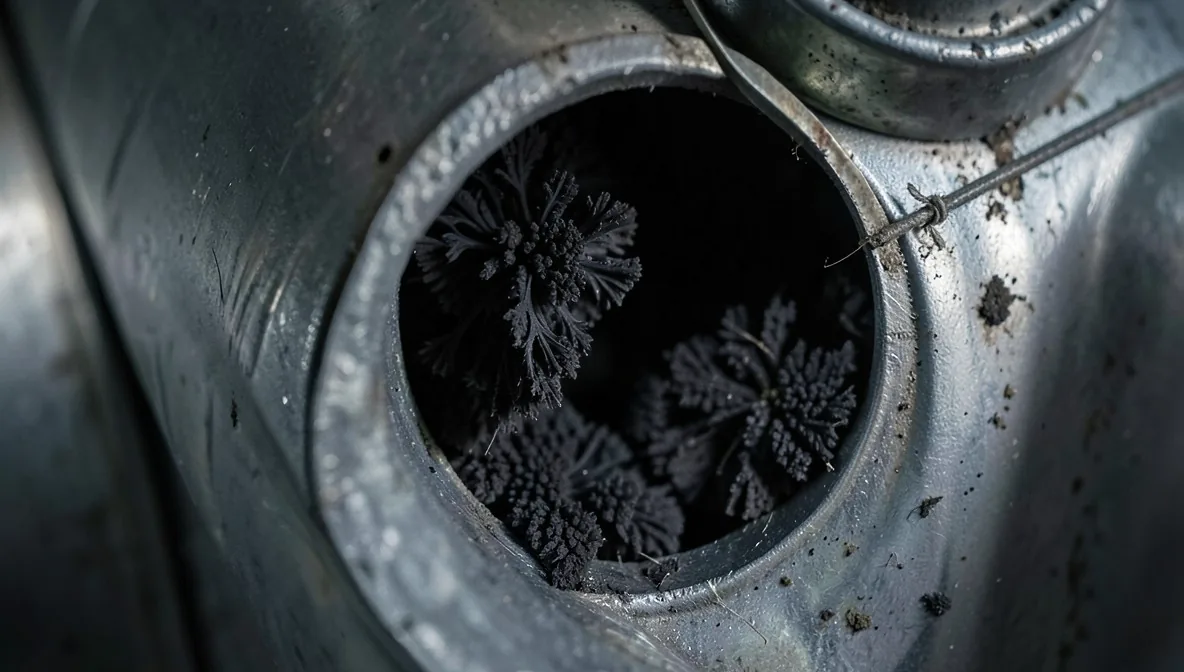
Why is mold a year-round problem in South Florida?
Because the one thing mold needs most — moisture — is present nearly every day. In drier or seasonal climates, mold activity slows in cooler, less humid months. South Florida doesn’t get that break: warm temperatures and high humidity persist through most of the year.
According to CDC researchers, “mold cannot grow unless there’s moisture” (CDC). Since South Florida’s outdoor humidity routinely sits well above the level that fuels mold, every door opening, AC cycle, and damp surface becomes an opportunity for growth. That’s why South Florida homeowners often deal with mold even when there’s no obvious leak or flood — the ambient humidity alone can be enough.
What humidity level causes mold to grow?
Mold risk rises sharply once indoor humidity climbs past roughly 50–60%. The CDC recommends keeping indoor humidity as low as you can — no higher than 50% — all day long, and notes that an air conditioner or dehumidifier helps maintain that level (CDC).
The EPA similarly recommends keeping indoor humidity below 60%, ideally between 30% and 50% (U.S. EPA). The gap between South Florida’s typical outdoor humidity and that 50% indoor target is exactly the gap homeowners have to close with active moisture control.
| Indoor relative humidity | Mold risk | What it means |
|---|---|---|
| 30–50% | Low | CDC/EPA recommended range |
| 50–60% | Rising | Approaching the upper safe limit |
| Above 60% | High | Conditions favor mold and dust mites |
How fast can mold grow after moisture exposure?
Faster than most homeowners expect. The EPA states that mold can begin growing on damp materials within 24 to 48 hours of water exposure, which is why drying wet areas promptly is so important (U.S. EPA).
In a humid climate, that window matters even more. A small leak, an overflowing AC drain pan, condensation behind drywall, or water tracked in after a storm can seed mold growth in a day or two if the area isn’t dried quickly. Because the surrounding air is already humid, those damp spots don’t dry on their own the way they might in an arid climate.
Where does mold usually hide in Florida homes?
Often in places you don’t routinely see. Mold tends to colonize wherever moisture lingers and airflow is limited.
Common hidden locations include:
- HVAC systems and ductwork, where condensation collects on cold surfaces.
- AC drain pans and lines that clog and overflow.
- Bathrooms and laundry rooms with high moisture and poor ventilation.
- Behind walls and under flooring after slow leaks.
- Closets and storage areas with stagnant, humid air.
Because much of this growth is out of sight, a musty smell is sometimes the first sign — and a reason to measure rather than guess.
Does mold affect my home’s indoor air quality?
Yes. As mold grows, it releases spores and can contribute to musty odors and airborne particulates that circulate through your HVAC system and into living spaces.
For families with allergies, asthma, or general sensitivity, indoor air that carries mold spores and elevated humidity is uncomfortable to breathe. Managing mold is therefore part of a broader indoor air quality strategy that also includes filtration and ventilation — not a standalone fix. (This is educational information about indoor air quality, not medical advice.)
How do I prevent mold in a humid climate like South Florida’s?
Control moisture first, then support clean air with filtration and purification. Because you can’t change South Florida’s weather, the strategy is to keep your indoor environment drier and cleaner than the air outside.
Practical steps:
- Keep indoor humidity at or below 50% using your AC and, if needed, a dehumidifier (CDC).
- Dry any wet areas within 24–48 hours to stay inside the EPA’s mold-prevention window (U.S. EPA).
- Maintain your HVAC system — clear AC drain lines, change filters, and keep ducts clean.
- Ventilate moisture-heavy rooms like bathrooms and laundry areas (ASHRAE Standard 62.2 sets residential ventilation guidance).
- Add air purification to support cleaner air alongside moisture and filtration control.
The Respicaire AirSterilizer PRO is an in-duct PCO (photocatalytic oxidation) air purification system that installs into your existing HVAC and works alongside good filtration, ventilation, and humidity control to support healthier indoor air. It is CARB Zero-Ozone Verified.
FAQ
Q: What humidity level stops mold from growing? A: The CDC recommends keeping indoor humidity no higher than 50% all day, and the EPA recommends staying below 60%, ideally 30–50%, to limit mold.
Q: How quickly does mold grow after a leak? A: The EPA reports that mold can begin growing on damp surfaces within 24 to 48 hours, so drying wet areas promptly is essential.
Q: Why does South Florida have so much mold? A: The region’s warm temperatures and high humidity persist year-round, continuously supplying the moisture mold needs to grow.
Q: Where does mold commonly hide in homes? A: In HVAC systems and ducts, AC drain pans, bathrooms, behind walls, under flooring, and in stagnant closets — often out of sight.
Q: Can an air purifier alone stop mold? A: No. Mold control starts with moisture management. Air purification and filtration support cleaner air but work best alongside controlling humidity and fixing moisture sources.
Take the next step toward a drier, cleaner home
Mold in South Florida is a moisture problem first — and the only way to know your home’s real risk is to measure it. Start with our free 2-minute Air Health Assessment to flag your home’s likely moisture and air-quality risk factors, then book a free in-home measurement where a specialist checks your humidity, ventilation, and indoor air. It’s educational and pressure-free — and the smartest first move toward keeping mold from becoming a year-round houseguest.